
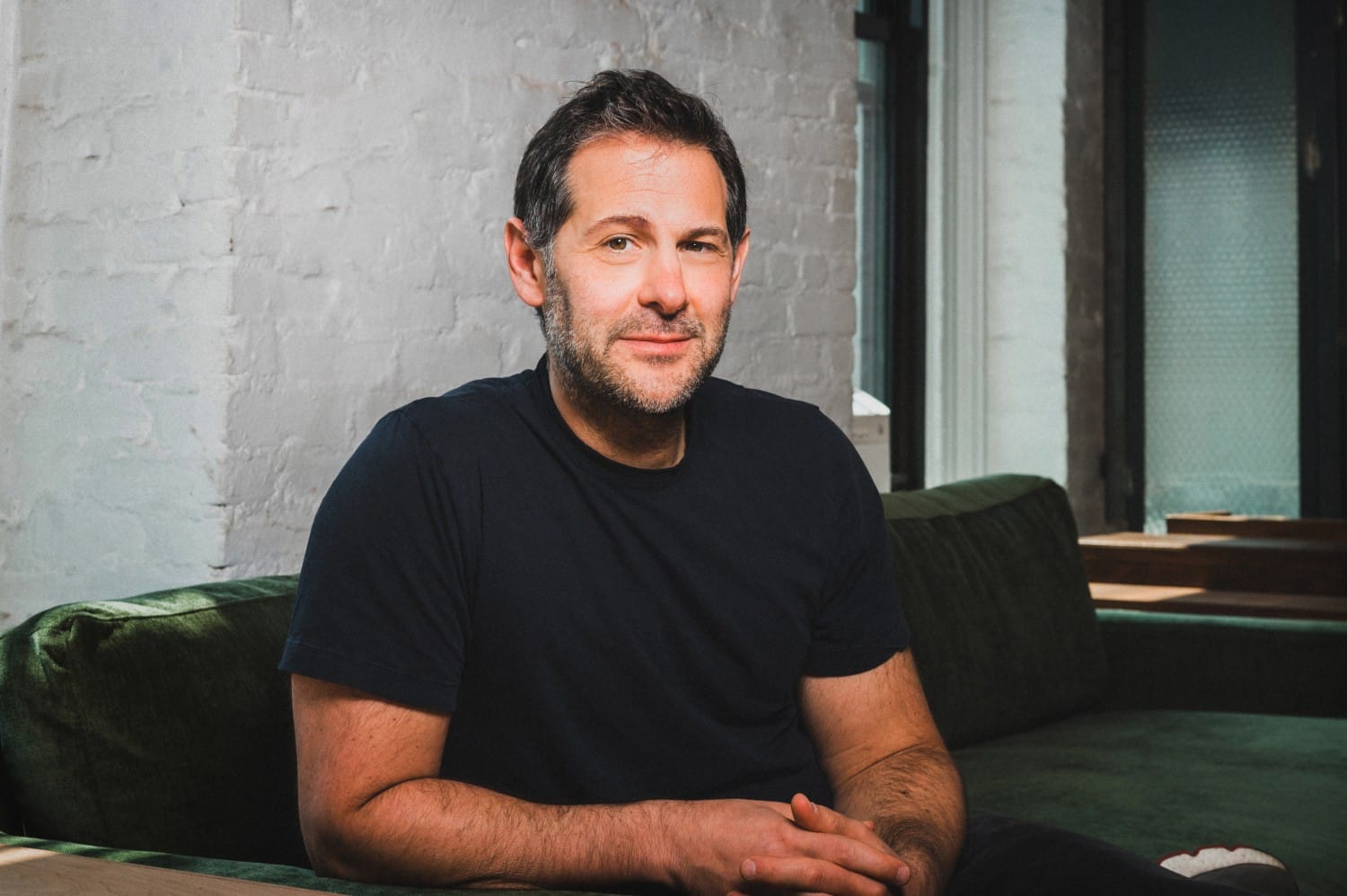
Ben Leventhal has been one of the most influential people in the culinary world over the past 20 years, which is how long I’ve been part of the same ecosystem. In 2005, the New York native co-founded Eater with Lockhart Steele, which shook up how publications and websites covered restaurants. In 2014, he co-founded Resy, another disruptive company that challenged established reservation platforms like OpenTable and sold to American Express in 2019. He was Resy’s CEO and remains a Strategic Advisor. I worked as a Contributing Editor for The Feast in 2010-2011 when Ben was Executive Editor for this NBCUniversal restaurant coverage platform. I recently spoke with Ben by phone to learn about his career trajectory before and after The Feast, his interest in restaurants, and Blackbird, the New York City based “loyalty company that rewards people who love restaurants” that recently launched in Los Angeles.
You said that restaurants were your “happy place” growing up. What were 3 local restaurants you visited on a regular basis that you remember fondly, and what did you like about them?
We were regulars at a place in Westchester, where we lived for most of my childhood, called Taste of China. A cookie-cutter suburban joint in retrospect, but we were regulars and we loved it. This was before point-of-sale platforms were ubiquitous, so the checks were dropped handwritten, and it was my job to check the waiter’s math.
Chin Chin on 49th St was another favorite, and a place where I got an early taste of city-grade hospitality. The owner’s name was Jimmy Chin and my father was a regular there. The first time I ate at Chin Chin, Jimmy, who I’d never met before, came over to the table and said to my dad, “He’s getting so big, Mr. Leventhal!”
I saw that you majored in finance at George Washington University. What inspired you to become an entrepreneur, and then a serial entrepreneur? What made you think that you could start and scale companies?
One thing to know about entrepreneurs is they often have no other choice. I mean, I can’t really imagine a different career other than this. There are not that many things I’m particularly good at, so I think in many ways, this was just sort of the inevitable path. But the thing about being an entrepreneur is, when you have to, you lock onto an idea and then refuse to let it go. If you can do that, you can stay focused and keep executing, you’ve got a shot. For whatever reason, this is the one thing I’m good at. So here we are.
Do you group all your businesses together? Seems like a pretty wide spectrum between Eater, Resy and Blackbird.
I’ve always thought about restaurants as being more than small businesses that serve food. And I’ve always thought that restaurants are, in the end, entertainment assets. Think about a restaurant as entertainment. Put it on par with the theater or a sports event, and I think you can start to understand how and why restaurants can develop loyal followings. Great restaurants have incredibly loyal, enthusiastic, devoted fans, and they’re willing to come back over and over and over again. That’s how you root for your local sports team. That’s been something that’s been top of mind for me, and to some extent, a through line.
The other thing that I’ve been able to think about is restaurants and technology opportunities. When we started Eater, publishing software was going through a revolution online. When we started Resy, technology was shifting. The center of gravity was turning to mobile, and we did a bunch of things with that platform that were mobile first, before it was obvious to do so, at least for restaurants. With Blackbird, we’re thinking about payments in a new way. Again, thinking about cutting edge technology and how that might benefit restaurants. So I think about using technology to advance restaurants, to help operators do better, be more efficient, and have more agency when it comes to the long term viability of the restaurant. To some extent, that’s how I link these things together.
In terms of Eater, what was your original goal, and in what ways has Eater continued to meet or exceed your expectations?
With Eater, the idea was that restaurants were not being talked about in a way that represented what they were. Restaurants are my happy place. We talked about restaurants as these exciting, dynamic businesses where every last bit of it was a curiosity, from the chef to the owner to the color of the logo and the design. We just had this insatiable appetite for restaurant content, the minutiae of it all. That was how we started talking about restaurants, and how we got into it. We looked at what we wanted to read. The way we wanted to talk about restaurants, and the kind of content that we wanted to be reading, didn’t exist. So we created it.
The next part of your journey, with The Feast and NBC, was from 2009-2011. Video was a big part of the platform, which seemed to be ahead of the curve. You also had a lot of talented writers and editors. Why do you think The Feast ended up being fairly short lived?
I think with The Feast, it was not the right time. And I don’t think the execution was as good as it needed to be. The idea, Rotten Tomatoes or Metacritic for restaurants, is an idea that keeps coming back around. I think we just didn’t stick the landing on the execution. We couldn’t quite get the algorithm right. And I think that the discovery piece was a bit underpowered, but we discovered an interesting thing while we were doing it, that people have a hard time reconciling a good restaurant getting a rating like 65%. We wanted to create something where every restaurant could be evaluated on the same scale, be that a small local place up to Le Bernardin, and it was really hard for people to wrap their heads around, 65% being plausible for their favorite neighborhood joint. There was a credibility problem. I think that’s how we were all conditioned that time, to expect every restaurant to have 4 ½ stars thanks to Yelp and other services. So we had an issue around how the ratings were being perceived, even though the calculation was good and sound and made intellectual sense. I guess it didn’t emotionally sit well with consumers.
What motivated you to start Blackbird?
Blackbird is, to me, just sort of what happens next. Restaurants have exploded in popularity over the last decade, certainly over the last five years. Alongside that, we’ve seen these humongous companies grow up, DoorDash, Uber Eats, Toast, AmEx, and Resy. We have the opportunity to consider a platform that gives a lot more control back to restaurants, both from a customer acquisition and ownership standpoint, and also from a long term economic standpoint. To me, that is what logically happens next. Airlines obviously have done loyalty incredibly well. Credit cards have done loyalty incredibly well. Restaurants should do loyalty very well. So far, restaurants have done well with regulars at a very small scale. Your average local restaurant may have cultivated a handful of regulars. Now some restaurant groups, and the really big ones, are starting to have their own apps and do loyalty well, but most restaurants have a real problem when it comes to customer acquisition and retention. That’s really what we feel, is the opportunity, and if we can get it right, something that will really move the industry forward in a very positive way,
What is your pitch to restaurants for why they should be using Blackbird?
We have a platform that allows you to know your customers and develop new regulars and do so at a price point that makes sense to you.
How does Blackbird work, and how does Blackbird make money?
It’s a loyalty and payments platform. We make money on transaction processing, and we make money when restaurants or third parties use $FLY as a means of customer acquisition.
$FLY is your crypto currency?
$FLY are our loyalty points. It’s technically on chain, but it’s not crypto in a traditional sense, meaning customer $FLY is not fungible and not freely tradable. A customer can load $FLY using USD, USDC or their credit card to bank $FLY on our platform, but you can’t turn it back into USD. $FLYdoesn’t function exactly as a crypto token would, but it is on chain, so over time, we may do different things with it on that basis, but is best understood today as loyalty points.
Okay, so $FLY doesn’t exist beyond your platform.
Your website says, “Blackbird restaurants are the best restaurants.” What are the criteria for restaurants to participate? Who’s deciding what makes them the best restaurant, and who is eligible to participate?
We think the best restaurants are the ones that, in a neighborhood or a city, are making people really happy. That can be at a super high end, or it can be very casual. We work with everyone in L.A. from Gjelina and Gjusta to Felix to RVR and Rustic Canyon and lots in between. But really, like when we think about how to build out our network, it’s about focusing on core neighborhoods in big cities to start and working our way outwards from there.
It seems like a lot of the restaurants are on the Westside at the moment.
We definitely started with a Westside focus. I think you could expect us to be on the Eastside starting early next year.
What are the markets that Blackbird is in now?
New York, L.A., San Francisco, Charleston and Denver/Boulder.
How did you decide on those markets?
To some extent, Blackbird works in all places with great restaurants. These days, almost every major city has great restaurants, so in some ways, we could start anywhere. We want to have a large network of restaurants across the country. New York, obviously, is our home, our backyard. San Francisco and L.A., I think, given the standing of the restaurant scene in those markets, are probably table stakes for us. Charleston and Denver, because we think that they’re just awesome, smaller restaurant towns, are places where people feel really passionately about restaurants. They’re amazing places and we can get to market quickly and build the right kind of relationships with the right restaurants and hopefully get momentum quickly.
What is your pitch for users to use Blackbird?
The more you use Blackbird, the more rewards you get, the better your dining experience. The more you use the platform, the more your rewards are going to be accelerated. Once you qualify, we have a program called Blackbird Club, which gets you accelerated rewards, first at a 3x reward tier and then at a 5x reward tier. The more you eat, the more magical it should be. That’s how we’re crafting the program.
Blackbird rewards vary by restaurant. What are 3 specific examples of rewards that restaurants have recently offered Blackbird diners?
We just launched in Los Angeles and have been having some fun with rewards – tossing in Felix’s famous squash blossoms with any order, or picking up the tab for an extra scoop at Sweet Rose Creamery. It’s simple: we want our members to feel taken care of and a little delighted every time they dine. That’s how we build loyalty.
Beyond rewards, we frequently host Blackbird Club Members’ Nights which are always awesome.
Who would you say is your closest competition? And what would you say differentiates Blackbird from what they’re doing?
To be honest with you, we don’t focus too much on our competition. I would say that our aim is to develop a vibrant community of people that love restaurants, and to build a platform that is always restaurant first, that has the operator and the people who work at restaurants top of mind. And I think if we can do those things, we can build a really incredible ecosystem of restaurant lovers and help restaurants get in control of their economic futures. We focus on our platform and how to build it to be something that really helps propel the industry forward.
How has traveling impacted your perspective on the greater U.S. restaurant community?
I think the biggest thing that has changed over the last 20 years, and it’s really accelerated in the last 10, is that every city in the country of any size is a great restaurant city, the bar for food has universally gone way up. That’s very exciting. Whether it’s a second or third tier market from a population standpoint, doesn’t matter. The food is amazing. The food is local and sophisticated and consistent and cutting edge, and it’s great. To some extent, that’s about where talented, creative restaurateurs and chefs have chosen to settle down. To some extent that’s because the capital for restaurants is coming from real estate developers now, and other sources of capital that believe that restaurants are important neighborhood amenities. The fact is that there are great restaurants everywhere now, and that’s incredibly exciting if you’re somebody who travels, or if you’re somebody who’s local and just likes to eat.
Being part of a restaurant ecosystem and just coming at it from different angles over the years, how has that changed your view about restaurants?
The longer I’m in this industry, the more I believe in it. I see that there’s a bright future ahead. I think we, the industry, has a tendency to get bogged down with the problems and challenges of the present, but I think to some extent, the industry is getting better at looking towards the future. I think that’s exciting. I strongly believe we are on the cusp of a golden age of restaurants. When you look at how packed popular restaurants are, when you look at the way restaurants are evolving, from a business model standpoint, from a brand development standpoint, and from a marketing sophistication standpoint, I think the future is extremely bright. I’m excited to see what’s next.




Leave a Comment